


Why is it that, despite claims to be otherwise, organizational life remains so persistently messy, even stupid sometimes? In his now forgotten classic Of Human Interaction, Joseph Luft, one of the originators of the Johari Window model, highlights some key assumptions and the philosophy behind it.
We operate under the illusion that logic and data drive all our interactions in the workplace. But Luft reminds us that human interaction is built on a much more complex, and often irrational, foundation.
The Johari Awareness Model shows a more holistic and, perhaps, disarming reality: leadership is not what just you do, but the “interpersonal dance" you create and participate in through your interactions.
In this piece, I revisit Luft’s philosophy and what it means to leadership.
👋 Get my new articles in your inbox 👇
Eight assumptions underlying the model
Luft is remarkably candid about his biases, acknowledging that these paradigms are not shared by all psychologists but essential for a holistic understanding of human behavior. These assumptions redefine how leaders see their team and themselves:
1. Holistic vs. elementaristic units. Human behavior is best understood in terms of wholes or large units of behavior. Analyses of small units of behavior, such as what the muscles or sense organs are doing, are of value only as related to the total person and context.
2. Subjectivism vs. objectivism. The key to what is happening in a group or between persons is what is going on subjectively, what the feelings are. Subjective factors such as attitudes and values tell how the person sees himself and others and how he orders his world.
3. Irrationalism vs.rationalism. Though some of the events in groups and in persons can be viewed as being orderly and making good sense, behavior is influenced more by emotions and by largely irrational strivings; logic and reason play relatively minor roles in human interaction.
4. Behaving without awareness vs. behaving with awareness. The individual, like the group of which he is a part, has limited awareness of the sources of his own behavior and of the effects of his behavior on others. Crucial aspects of behavior are best understood by taking into account sources and determinants of behavior which are hidden from the person or about which he has limited understanding.
This lack of awareness is a major cause of leadership derailment.
5. Quality vs. quantity. It is desirable to be able to measure and weigh the forces governing behavior. However, the best understanding comes with appreciation of qualitative differences of the processes of interaction between people and within groups. Qualities such as acceptance, collusion, influence, conflict, and trust, for example, are important even though they cannot be defined or measured with high precision.
6. Change states vs. structural properties. Attention should be directed to ongoing processes and the changes which are taking place. The search for an analysis of structural properties, though useful, is less important than an appreciation of change states.
7. Personal vs. nomothetic orientation. The experiencing individual or group deserves more stress than do abstract transpersonal rules. The problem is to discover general knowledge of persons and groups by direct concern with persons rather than by the application of abstractions which tend to lose humanness along the way.
8. Fluid vs. restrictive approaches. The first of these approaches favors "a basic predisposition to experience people and life in all their complexity in a rather relaxed fashion, while the latter suggests a tendency to deal with reality in a more controlling and compartmental fashion, through restriction of attention and through isolation of entities and events".
Qualities of the Johari Awareness Model
If the assumptions are the "why", the qualities are the "how": the characteristics that make the Johari Window a universally applicable tool for leaders.
1. Awareness and consciousness are uniquely human attributes. (Consciousness usually refers to what is felt within oneself and awareness, to that which is felt outside oneself. However, the terms are used interchangeably in these pages.) These states of knowing are supremely human and are of course central to any consideration of human inter- action. The model starts with both states simultaneously.
2. Intrapersonal and interpersonal affairs are inextricably united. Regardless of one's preferred orientation in personality theory, identity and relationships are sufficiently intertwined so that it makes sense to consider them together. This can be done in the Johari framework without committing the theorist to a position which would violate the rest of his theory.
3. The model is essentially content free. No assumptions need be made about the sources of human behavior, such as growth, psycho-sexual or security needs, or other social and psychological needs and drives. Yet the model is sufficiently broad and open so that any of these assumptions could be applied. However, owing to the model's structure, the theorist can never lose sight of the various states of awareness and consciousness.
4. The constructs implicit in each of the quadrants, lend themselves to verification. The open quadrant, Ql, the blind quadrant, Q2, and the hidden quadrant, Q3, are known to at least one person and thus are potentially confirmable. Even the unknown quadrant, Q4, which is known neither to the person nor to others, is eventually confirmable.
5. The model can be applied to any human interaction. There is no inherent subject limitation. Gangs fighting, friends talking, executives leading, lovers loving—any of these interactions can be viewed and conceptualized within the model's framework. In this sense it is universally applicable.
6. The model is sufficiently uncomplicated so that it is readily used. A wide range of people, from college freshmen to postdoctoral scholars, laymen as well as professionals, are able to grasp the model and use it to think about interaction without requiring extensive background in the behavioral disciplines.
7. The processes inherent in the model guide the reader to important characteristics of human interaction. For example, considerations of change in the first quadrant call attention to processes involved in moving to greater or lesser openness. Similarly, the processes involved in reducing or increasing blindness in the second quadrant focus on crucial developments in a relationship. The significance of any interpersonal event is sharpened when it is seen in the context of all four quadrants.
Implications for Leadership
Leading beyond logic
For a manager, accepting that logic is secondary to emotion or that we're often "blind" to our impact can be quite a realization. It moves leadership's role from task of "command and control" to one of "awareness and discovery".
If human behavior is driven more by irrational strivings and subjective feelings, the leader’s role shifts from "Chief Problem Solver" to "Architect of Climate". Less of a chess master, and more of a gardener.
Because the key to group dynamics is what’s occurring subjectively, a leaders who rely solely on objective metrics will remain blind to the "sub world" of grievances and attitudes that actually determine morale. In fact, the most significant changes in productivity come from shifts in informal "group norms" that exist outside the formal structure.
How I am contributing to the problem
The unity of the intrapersonal and interpersonal implies that you cannot "fix" a team without first examining your own behavior and contribution to the mess.
This means accountability: a change in any one quadrant of your awareness inevitably affects every other quadrant in the relationship.
For leaders, this means that increasing the "Area of Free Activity" (Quadrant 1) is the only reliable way to apply the full skills and resources of the team. When you reduce the energy tied up in defending hidden or blind areas, you release that energy for collective work.
The vulnerability of the opaque self
Most leaders operate as if they are "open books," assuming a level of transparency and control over their image that simply doesn't exist. By recognizing that their public self is often smaller and more "opaque" than they realize, leaders can begin to invite the feedback necessary to reduce their blindness.
Acknowledging that we all behave without full awareness of our motives transforms you from an omniscient authority to a "participant-observer". Because you're always susceptible to how others see you, your "blindness" is not a defect to be cured, but something to be managed through humility and feedback.
Those who ignore this, risk becoming imposters, presenting a public self that is widely known to be inauthentic by everyone except themselves.
Navigating permanent white water
When operating in complexity, the emphasis on "change states" over "structural properties" is a requisite for survival. Those who cling to a static organizational chart will be overwhelmed by the dynamic, ever-changing nature of modern workplaces.
Instead, the model guides us to see it as a process of "becoming" rather than "being". This fluidity allows you to navigate "permanent white water" by focusing on the "ongoing process" rather than trying to force a return to a non-existent state of certainty.
The leader's job
The model shows that the "law of initial conditions" governs every relationship: the patterns you establish in the first few minutes of an interaction are stored in the "implicit memory" of the group and are remarkably resistant to change.
Therefore, a leader’s most vital skill is the capacity for "interpersonal discernment"—the ability to mutually craft a unique relationship with others that honors the mystery of the unknown while expanding the clarity of the known.
Related: how framing creates psychological safety
The importance of Luft’s framework to leadership is its emphasis on managing "interpersonal climate"— the degree of trust and openness that allows skills to be applied effectively. From this perspective, innovativeness is not just a matter of better strategy, but also about leaders’ interest in and concern for other people. In many ways, Luft was ahead of his time and was a precursor to psychological safety as we know it today.
Consider your own team: How much energy is currently being spent hiding, denying, or being blind to behaviors involved in your daily interactions?
Moving beyond pure theory to practical application requires the courage to be surprised—both by ourselves and others.
Related reading on the Johari Window
 Sheril Mathews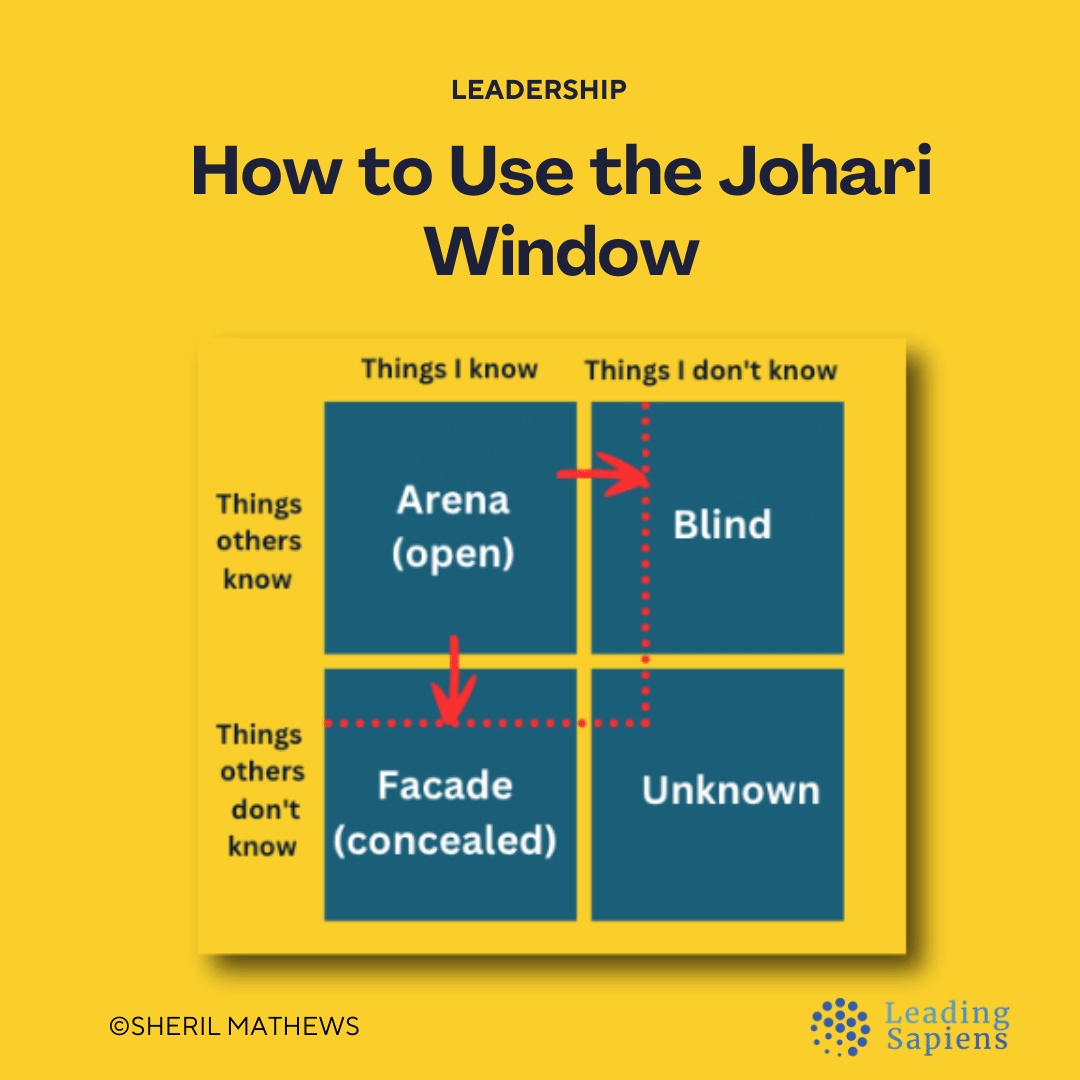
 Sheril Mathews
 Sheril Mathews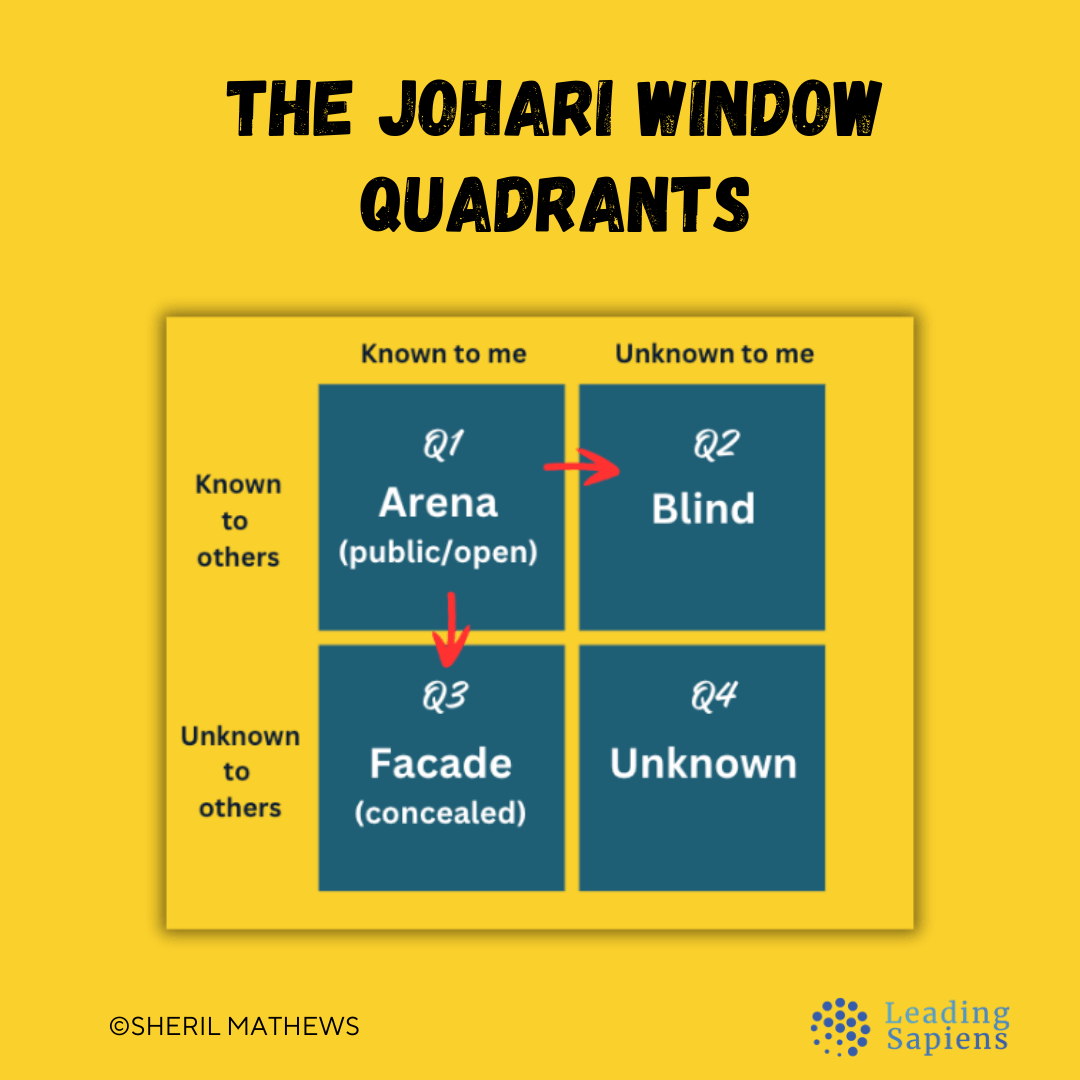
 Sheril Mathews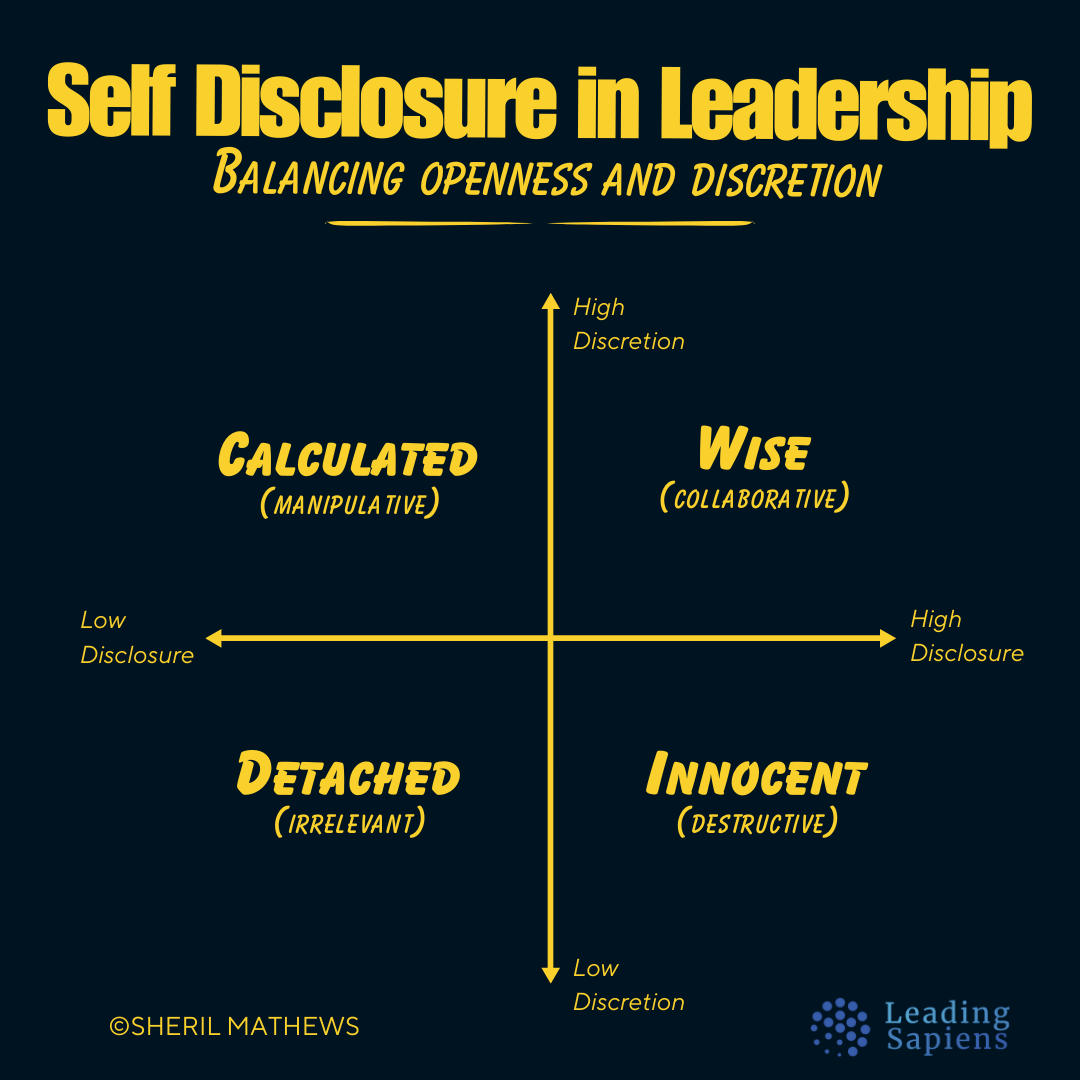
Sources
- Of Human Interaction by Joseph Luft.
- Hanson, P. (1973). The Johari window: A model for soliciting and giving feedback.
- Luft, Joseph, & Ingham, Harry, (1961). The Johari Window: A Graphic Model of Awareness in Interpersonal Relations.
- The New Johari Window by William Bergquist