

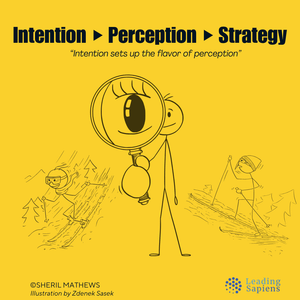
I used to ride the Amtrak train from DC to New York City regularly. The train has a “quiet car”—a section where everyone is supposed to be quiet so you can sleep or get some work done. People use the quiet car because they want serenity, but it was astounding how often it backfired. When you expect quiet, you become ultra-sensitive to the slightest noise. If someone in the quiet car speaks in more than a whisper, the entire car plunges into a state of deep irritation. I’d bet that sitting in the “peaceful” quiet car actually leaves people with higher blood pressure. [3]
Morgan Housel mentions this example in the context of finances and social debt that accrues around expectations. But there are far-reaching implications of the link between intentions — expectations — perceptions — and the actions/strategy that follow them.
👋 Get my new articles in your inbox 👇
Allow me to share a more mundane example: my attempts at trying to meditate.
Attention training is now a key aspect of how I coach. But for years, I struggled at learning meditation. One reason was because anytime I tried it, I intended to get to “uninterrupted focus”. This intent, however, set up the expectation of quietness — which meant that any and all “noise” was a “disturbance” and an impediment to my goal.
To be clear, the sounds I found disturbing were on their own neutral. There are no “disturbing sounds” per se. There are only sounds. I introduced the notion of “disturbing” which then modified something that was otherwise neutral (mostly).
My practice changed dramatically when I became more comfortable with a slightly different stance. In my changed approach, any sound — a bird singing, a jackhammer going off in the distance, or my mind’s own blabbering — is recognized as “part of the practice” and thus nothing to be fighting against, but instead to be worked with. The sounds arise and then go — I’m simply aware of them.
That slight adjustment of intention entirely changed my results. As the meditation teacher Ron Burbea put it,
Intention sets up the flavor of perception.
Let’s now turn to a classic example of strategy and leadership in some of the harshest conditions imaginable.
In October 1911, two expeditions set out across Antartica toward the same objective: the first humans ever to get to the South Pole.
The conditions were brutal: More than 1,400 miles round trip across shifting ice, a punishing ascent up a 10,000-foot glacier, and then a long traverse across the polar plateau in temperatures that dropped below −60°F, with winds reaching 100 miles per hour.
Roald Amundsen (Norwegian contingent) and Robert Falcon Scott (British) were both seasoned explorers with prior experience in polar conditions. Scott had already led an Antarctic expedition and returned a decorated national hero. Amundsen had successfully navigated the Northwest Passage, one of the most difficult routes on earth. Both commanded capable teams that prepared for months through the Antarctic winter.
But, despite the similarities, the outcomes were very different.
Amundsen’s team reached the Pole first, planted their flag, and returned to base after an arduous journey but with discipline and control.
In contrast, Scott’s team arrived more than a month later, only to find the Norwegian flag already there. On the return journey, weakened by exhaustion, cold, and dwindling supplies, Scott and his men were overwhelmed by conditions they could no longer manage.
They died in their tents, just eleven miles short of a supply depot that might have saved them.
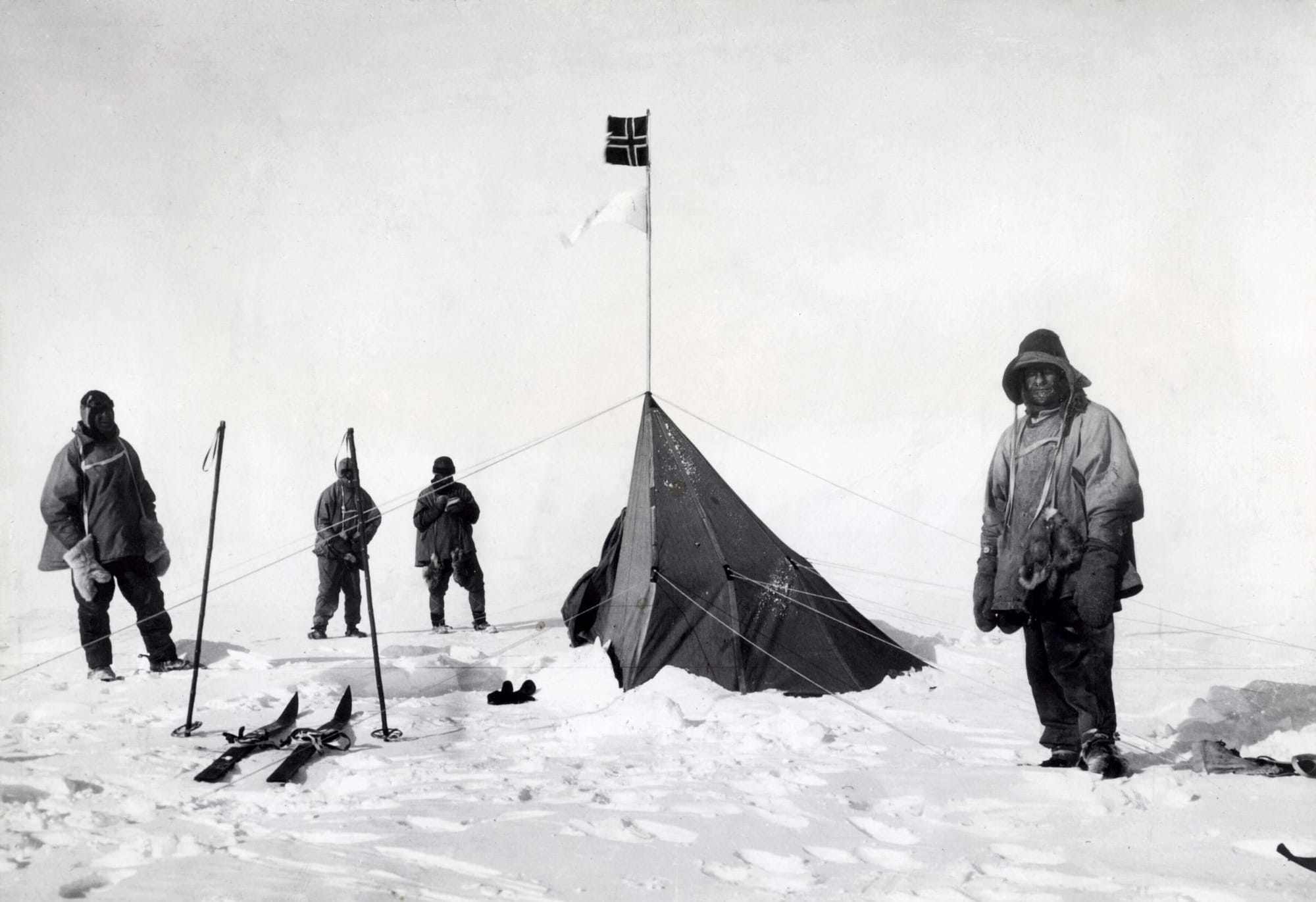
There are many conflicting interpretations and causal analyses of what went wrong with Scott’s expedition versus the success of Amundsen. But I want to highlight one particular aspect that’s relevant to our discussion here.
While both leaders faced the same environment, they weren’t operating from the same assumptions. Their goals were the same but intentions and interpretations were very different.
Scott’s approach treated wind, cold, and unpredictability as recurring obstacles that had to be pushed through. Amundsen treated those same conditions as the medium through which any serious plan had to operate. For one leader, the environment was to be subdued through a combination of effort, discipline, and determination. For the other, the task was to fit the method to the environment.
Snow, after all, to Amundsen… is simply Nature in another form. It is a versatile, complex and friendly substance. It is building material, insulation, water supply, a refrigerator for preserving food and, to a skier, an efficient means of travel, making all the frozen world a highway.
Scott, by contrast, saw snow as an enemy to be conquered, with himself as the invader… [1]
Intention changes the flavor of perception.
Leaders are to a social system what a properly shaped lens is to light. They focus intention and do so for better or worse. [2]
As it turned out, these slight differences while subtle were very consequential. Their differing stances — adapting to conditions vs. overcoming them — shaped many downstream decisions that ultimately played a role in the outcomes:
(1) Amundsen understood that survival required learning from those who had already mastered life in these extreme conditions. He studied Inuit practices, adopting their clothing systems, methods for icing sledge runners, and deep practical knowledge of dog driving. Scott, by contrast, came from a naval culture that prized stoicism, hierarchy, and courage under hardship. He did not ignore prior lessons outright, but he never fully reorganized his expedition around them. His system remained a mishmash of ponies, dogs, motor sledges, and human hauling, relying more heavily on effort.
(2) While Amundsen saw snow as a surface to travel across efficiently—a highway for skis and sledges—Scott’s expedition repeatedly experienced snow and terrain as obstacles that slowed movement, exhausted men, and punished transport systems.
(3) Amundsen saw dogs as essential and combined their power with the efficiency of skis. The Norwegian approach was built around the strengths of animals, tools, and terrain working together. Scott, however, never fully embraced dogs as the central solution, placing greater symbolic and operational weight on man-hauling. Human exertion became a larger share of the plan than it needed to be.
(4) Amundsen rejected heavier European clothing in favor of loose-fitting reindeer and sealskin garments modeled after Arctic patterns. These allowed better management of heat, moisture, and movement—critical advantages in extreme cold. In contrast, Scott’s party relied heavily on woolens and windproof layers that became heavy, damp, and restrictive under severe conditions. They stiffened with frost and made movement harder.
Amundsen’s strategy was built on adjustment rather than domination. He did not need Antarctica to cooperate in order to succeed. His methods assumed the conditions as given and worked from there.
Endurance, an obvious requirement in extreme conditions, is equally applicable in the more mundane day-to-day grind of corporate existence.
Consider the notion of high frustration tolerance — which I deem as a prerequisite for succeeding in large corporate setups where bureaucracy and red tape are the norm.
One stance is to treat these dysfunctional systems as headaches and impediments that stand in your way. Once you’ve set this “intention”, politics for example becomes a constant reminder that things are not as they are “supposed to be” and you wish things were otherwise. You wonder: How much more could I get done if it wasn’t for all this backbiting and pesky politics that keeps derailing my aims?
A more effective alternative is to adjust our intention and see them as “conditions of the game”. We chose to play football, so expect to get tackled. To state the obvious, wanting to play football without getting tackled is wishful thinking. While possible, it won’t be a game anymore.
By treating organizational dysfunction as part of the game I accept things “as they are” instead of wanting them otherwise.
The mistake is to treat acceptance as passive or being a doormat. Far from it.
Often grumbling feels active because it makes us think we’re doing something about it, but not really. Accepting things as they are, in contrast, preserves energy and focus, and opens up actions which are otherwise hidden when we’re too focused on what’s not working. We surely get tackled, but don’t die in the process. Instead, we adapt and keep playing the game.
All too often, burnout stems from not fully understanding the conditions of the game, and more importantly how our intentions are either fighting against conditions or responsively aligned with them.
Once I “accept”, I can see patterns – and patterns are predictable because human nature hasn’t changed. The same dynamics that ruled tribes of humans as hunter-gatherers are still applicable in everyday meetings to corporate boardrooms. We might smell and look different, but the underlying mechanisms are still the same.
Constraints, once seen this way, become a goad and guiding mechanism for action instead of something that thwarts ambition. Intention changes the flavor of perception.
The good news about intentions and interpretations is that they are malleable. And the more adept I’m at identifying and adjusting them, the more it increases my capacity for effective action.
Related Reading
- High frustration tolerance
- How’s your adaptive capacity
- Surviving institutional stupidity
- Self-efficacy: How you interpret your capabilities plays a big role in how you actually respond.
- Systems thinking iceberg: intentions and perceptions are at the deeper levels of the pyramid.
- Double-loop learning: stance determines downstream actions
- Subtracting Mental Models: identifying assumptions that are further upstream is more useful
Sources
- Huntford, Roland . Race for the South Pole.
- Pascale, Richard. Surfing the edge of chaos.
- Housel, Morgan . The Art of Spending Money.